Monday, February 28, 2022

Unleashing the Power of Love

When we face a crisis such as the war in Ukraine, it doesn’t seem like there is much we can do but pray (and refrain from complaining about higher prices that may result from sanctions we place on Russia). But does prayer really make a difference?

The peace activist Eileen Egan once said, “They make fun of us, the Catholic Workers, for praying so much, but we don’t care because we already know it works.” I suspect her confidence came from an understanding of how prayer works. The power of prayer lies in its ability to change hearts. Eileen knew that prayer works because over time her faithfulness to prayer led her to become more courageous, more loving, and more peaceful.

Prayer allows us to tap into the heart of God, with its infinite compassion and mercy. It’s not that God magically grants what we ask — rather, God invites us to widen the boundaries of our hearts and thus change the world in concert with God by acting in loving ways.

Our own transformation is the true outcome of prayer and is the conduit for miracles to occur. That is why Jesus so often probed a person’s heart and forgave his or her sins (blockages) before facilitating physical healing of an ailment.

So, can prayer bring about peace in Ukraine? Given the vast global outcry against the attack on the Ukrainian people and the willingness of other countries to impose costly sanctions and accept refugees, I would say that prayer is leading a great many people to broaden the boundaries of their hearts, grow in compassion, and advocate for an end to war and subjugation. As Jimi Hendrix said, “When the power of love overcomes the love of power, the world will know peace.” And it is faithfulness to prayer that unleashes the power of love.

Friday, February 25, 2022

Perseverance in Love

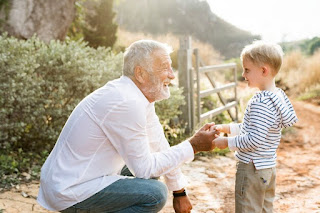
With so many diseases of the soul manifesting today — war, greed, racism, intolerance — I often turn my hopeful eyes to the next generation, because many of the young people I encounter seem very accepting of people who are different than they are. However, our oldest generation also can be a source of hope, because they give us a long view: Wars eventually end. It is possible to make progress, however tenuous, in civil rights. Dictators can and have been removed from power. Enemies can learn to live together when their children fall in love.

But what about now? Is our only option to wait in patience for tides to turn? By all means, no! Our daily acts of respect for others, our small demonstrations of kindness, our willingness to listen to others, the continual efforts of parents and teachers to raise compassionate kids — all these actions have power, and collectively they will bring us to a tipping point that leads to a more just society. The one thing we cannot do is give in to despair and stop our efforts, however small they may seem. We have to be faithful to what we know is true — that “love is the most powerful force the world possesses, and yet it is the humblest imaginable,” as Gandhi said — and keep at our humble tasks. By doing so, we are helping to create the world we want to live in.

I’ve shared this story before, but it’s worth repeating. One person said to another, “What do you think the future will hold?” “Flowers,” came the response. “Why flowers?” “Because I am planting flower seeds.”

Our elders taught us to set aside impatience and persevere in living in the way of truth. They didn’t have to do it alone, and neither do we, when we make an effort to create mutually supportive families, friendships, neighborhoods, congregations, and workplaces. “If you want to have hope,” as Daniel Berrigan said, “do hopeful things” — and you will find that others are eager to join you.

Wednesday, February 23, 2022

The Willingness to See

Jesus once asked a blind man, “What do you want me to do for you?” and the man replied, “Lord, I want to see.”

Well, naturally, we think. Who wouldn’t want to see? But actually, to choose to see is an act of bravery. To see means to risk being moved by beauty and by the suffering of others. To see means stepping beyond the safety of isolation to the messiness of connection with others who see what we see. To see on a spiritual level means enduring the discomfort of removing the log in our eye that Jesus spoke of — be it our pride, our selfishness, or our fear of loss —that keeps us from seeing clearly.

Sunita Puri, MD, a palliative care physician, has spent a lot of time with dying patients and their families. She said, “Eventually, I realized that it wasn’t my job to protect people from their grief or to solve it.” However, she discerned that it was her job to offer compassion, and “The prelude to compassion is the willingness to see.”


When we have the willingness to see, we stop observing the splinter in our neighbor’s eye and instead see the whole person, who is doing the best she can given her life circumstances. We can then extend compassion and forbearance to her, and to ourselves as well, when we act out of weakness, greed, envy, or anger. This leads to seeing ourselves and others as God sees us.


Jesse Manibusen wrote a song for those who want to see. The first verse goes like this:


Open my eyes, Lord.

Help me to see your face

Open my eyes, Lord.

Help me to see.


It’s a lovely song, but we need to be aware that we will need to pay in kind for having our eyes opened: we will be called to offer compassion to all those in whom we see the face of God.


Monday, February 21, 2022

The Book of Life

When we are born, our name is written in the book of life — and what is the book of life but the life of God, whose presence infuses all things?

There are many ways in which God is like a book, as I realized when I read the following description of books by Frederick Buechner:

“Something of what they contain gets into the air you breathe…. They are prepared to give you all they’ve got at a moment’s notice, but are in no special hurry about it…. They are giving you their eloquent and inexhaustible silence. They are giving you time to find your way to them. Maybe they are giving you time, with or without them, just to find your way.”

As with books, something of what God contains gets into the air we breathe, because we are inspirited by the breath of God (see Genesis 2:7, Job 33:4, and John 20: 22). Like a book, God waits for our attention and then, at a moment’s notice, utterly enfolds us. Both books and God give us eloquent and inexhaustible silence and time to find our way to them. Even when we don’t seek their companionship, God, like a book, gives us time to find our way.

The books sitting on our shelves issue a continual, gentle invitation to explore their contents. Jesus does the same when, as the Word made flesh, he persists in inviting us to follow him, saying, “…learn from me, for I am gentle and humble in heart, and you will find rest for your souls” (Mt 11:29). There is no need to read between the lines with words as straightforward as that.

Thursday, February 17, 2022

The Way to Peace

For most people, it seems like there is no middle ground between overconfidence and lack of confidence. Either we believe we know what is best and don’t need help from anyone else, let alone God, or we live in a constant state of low-level anxiety about our ability to be successful in our work and relationships.

It is our relationship with God that helps us find a middle ground between pride and false humility. It is an honor to be entrusted by God with the task of raising a family, teaching, or the like, but as Susan Quaintance, OSB, has noted, “…the one who is asking is also the one who is providing the grace and strength and creativity to do the job. I am not in charge of the big picture, of the how, of the outcome. Taking my fragile ego out of the equation makes it possible not to be afraid.”

The way to peace is to do our best — not more than our best, which is a sign of pride and leads to exhaustion, or less than our best, which is a sign of fearfulness and anxiety — and then let go of the outcome. In his book The Five Agreements, Don Miguel Ruiz says, “Doing your best is going to change from moment to moment; it will be different when you are tired as opposed to well rested. Under any circumstance, simply do your best and you will avoid self-judgment, self-abuse, and regret.”

Dan Schutte has written a beautiful song, These Alone Are Enough, that includes the following lyrics: “Give me nothing more than your love and grace. These alone, O God, are enough for me.” God’s wellspring of love and grace is inexhaustible. The question is whether we truly believe that is enough for us.

Tuesday, February 15, 2022

What Makes Us Human

On Valentine’s Day, I found myself at Union Station in Kansas City at the exhibit “Not Long Ago. Not Far Away” about the Nazi concentration camp at Auschwitz. You might think that this exhibit, which provides an extensive look at the suffering and genocide of millions of people, has little to do with the celebration of love. You would be wrong.

The exhibit includes stories of people who, in the midst of the most dehumanizing circumstances imaginable, clung to the part of their humanity that could not be stripped of them: the choice to love. One young Jewish mother who was selected to be a laborer chose instead to accompany her disabled son to the gas chamber so he wouldn’t face death alone. Another woman risked punishment by hiding her tin engagement ring, sometimes under her tongue, throughout her imprisonment. The Polish priest Maximilian Kolbe volunteered to die in place of Franciszek Gajowniczek, a married man with children.

Camp survivor Edith Eger said, “We were a family of inmates, we had to care for each other. If you were just for the me, me, me, you never made it.” Similarly, Mindu Hornick said, “It's a notorious thing that people in the camps survived in pairs, or because some other people were taking care of them. When people say, how did you survive? We lived for each other.”

Barry Lopez wrote, “It is through story that we embrace the great breadth of memory, that we can distinguish what is true, and that we may glimpse, at least occasionally, how to live without despair in the midst of the horror that dogs and unhinges us.” The stories that emerged from the camp at Auschwitz, despite the Nazi attempt to silence them, help us distinguish what is true: All people have value. Hatred is what makes people inhuman, not their bloodline, religious/cultural beliefs, or sexual orientation. We are mutually dependent on each other for our survival. And, most important of all: Love is imperishable.

Friday, February 11, 2022

Inspiring Others to a Greater Love

I’ve been swept up in a lot of memories this past week, because February 7 is my father’s death anniversary, February 8 is my parent’s wedding anniversary, and February 10 is the Feast of St. Scholastica, patroness of my community at Mount St. Scholastica. It is appropriate to reflect on their lives as Valentine’s Day approaches, because their legacy of love continues to guide me.

My dad’s love of God and his family was the guiding light of his life, and I was fortunate to have parents who modeled mutual devotion, respect, and companionship in their marriage. As for St. Scholastica, she famously challenged her brother, St. Benedict, to put love above the letter of the law when she asked him to prolong their last visit together instead of returning to his monastery for the night. When he refused, she prayed and God granted her request by sending a fierce thunderstorm that prevented Benedict from leaving. As St. Gregory remarked in his Dialogues, “Surely it is no more than right that her influence was greater than his, since hers was the greater love.”

We know that Jesus valued love above all else, because he observed that the greatest commandment is to love God with all our mind, heart, and soul and to love others as ourselves. Thus the finest use of our lives is to inspire others to a greater love, even after we die.

I’m reminded of the story of a woman who said to her husband, who was dying, “Moe, how am I supposed to live without you?” He responded, “Take the love you have for me and spread it around.” That is what the disciples of Jesus did after his death, and that is the best way to honor our own deceased loved ones, so that the unfolding of time and space will continue to be impregnated with their love, and ours.