Friday, August 31, 2018

Wisdom of the Heart


When John McCain was running for president of the United States, he wanted to choose Joe Lieberman as his running mate, but his advisors talked him into choosing Sarah Palin instead. It is now believed that McCain would have been more likely to have won if he had followed his instincts and chosen Lieberman. We will never know for sure how that scenario would have played out, but one thing we do know is that when we listen to the wisdom that is provided to us, we live in peace instead of with regrets.

We often pray for wisdom; for example, in Chapter 9 of the book of Wisdom, Solomon prays, “Send her [wisdom] forth from your holy heavens and from your glorious throne dispatch her that she may be with me and work with me….” And how does wisdom dwell with us and work with us? Most notably through our intuition. Yet we often fail to trust that the wisdom that comes to us at such times is truly from God.

Wisdom is one of the fruits of the Spirit and is available to all creatures. Animals and plants are much better at following their internal wisdom than humans are. Let us be alert to and trust in the wisdom that comes to us when we listen and incline the ear of our hearts. As Psalm 85:12 says, “Indeed, the Lord will give what is good.”

Wednesday, August 29, 2018

Resisting Expectation


We humans generate expectations because of our desire to feel secure and be in control. However, God has little regard for our expectations. I generally expect August weather to be hot and humid, and this morning I woke up to temperatures in the low 60s with a light breeze. What a delightful surprise!

Other surprises aren’t so pleasant. My older brother was laid off his job in Ogden, Utah, after being employed there only three years. What awful news! Three and a half months later, he was hired to be managing editor of the Yakima Herald-Republic newspaper. What great news!

We don’t know what each day will bring, but we can choose to remember that God is in the midst of it, whether what we encounter is to our liking or not. What we judge to be pleasant can bring refreshment and joy to our hearts. What we judge to be distressing can be an opportunity to trust that God will bring good out of it. May we grow in the discipline to resist judgment and take life as it comes, knowing that God is at the center of all that was and is and will be.

Monday, August 27, 2018

Sharing the Dream


The 55th anniversary of the Civil Rights March that brought 250,000 people to the Lincoln Memorial in Washington, DC, will be commemorated on August 28, 2018. It was at this event that Dr. Martin Luther King, Jr., proclaimed “I Have a Dream!” Most people don’t know that Dr. King had started to deliver a totally different speech in which the word “dream” wasn’t even mentioned. At one point as Dr. King was reading this other speech, the singer Mahalia Jackson called out, “Tell them about the dream, Martin! Tell them about the dream!” Dr. King looked over at her and then set aside his prepared speech. He became transformed from lecturer to preacher, speaking words from his heart that inspire us to this day.

At that moment, Mahalia Jackson felt the prompting of the Spirit and responded by encouraging her friend, Dr. King, to feel it and act on it too. Her attunement to the Spirit can inspire us to speak out and encourage each other when we need to fight for changes in unjust systems and advocate for the rights of the abused and oppressed. It appears we are at such a moment now in the Church, as we recognize the need for a new model of collaborative leadership. Concentrating power in the hands of a small segment of the church—the clergy—is an unhealthy model that has led to abuses. We must allow all members of the Body of Christ who have been blessed with wisdom and gifts such as administration, money management, teaching, and preaching to share in the responsibility of guiding the church.

All those who have been baptized and confirmed in the Spirit have a sacred responsibility to respond to the prompting of that Spirit. We may not have the voice of Mahalia Jackson, who was an extraordinary gospel singer, but we can learn from her how to use our own voice to encourage others to speak their dream of a just, inclusive, and nurturing kingdom of God.

Friday, August 24, 2018

Being Seen By God


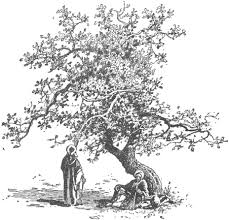
Today’s gospel reading regarding the call of Nathaniel mentions specifically that Nathaniel was sitting under a fig tree when he was approached by Philip. Why did John include this curious detail in his story? I found an explanation by James Rush, who noted, “According Rabbi Maimonides, if an Israelite wanted to express thanks for times of abundance or hope in difficult times one way would be to pray underneath a fig tree. Praying under a fig tree indicated complete trust in God and specifically that God would ‘see him.’ When Jesus said ‘I saw you under the fig tree,’ it immediately completed Nathaniel’s reason for being under the fig tree in the first place.... To be seen as a faithful Israelite by God” (https://christianity.stackexchange.com/questions/44884/john-147-49-understanding-nathaniel).

We don’t have to sit under a fig tree, or in any particular place at all, to be seen and known by God. As St. Augustine stated, “In order for us to see, we have been seen; in order for us to love, we have been loved.” God sees us as we are, enabling us to see and accept our own weaknesses and giftedness; God loves us as we are, prompting us to share that joy by loving others.

To be seen and loved is a powerful and life-changing experience. Being seen frees us from using all our energy to hide our weaknesses and failings and helps us take responsibility for using the gifts we have been given. Being known and loved leads us to recognize God (as Nathaniel proclaimed, “Rabbi, you are the Son of God; you are the king of Israel”) and fuels our zeal to share our joy by extending that love to others. That is why we should care a fig about where Nathaniel was sitting when he received the call to follow Jesus!

Wednesday, August 22, 2018

The Lessons of Heartbreak


It is clear that a great many people are feeling heartbroken because of the news about how bishops and other leaders of the Roman Catholic Church in Pennsylvania covered up child sexual abuse of more than 1000 victims by 300 priests over a period of 70 years.

Heartbreak is an inescapable response to this situation. As noted by the poet David Whyte, “Heartbreak is an indication of our sincerity…and is [an] essence and emblem of care….  Heartbreak may be the very essence of being human, of being on the journey from here to there, and of coming to care deeply for what we find along the way.

What we find along the way of following Christ is that we belong to one another. Consequently, we will reverence, protect, and nurture each other, with special care given to those who are most vulnerable and powerless—children, elderly persons, the poor, and refugees.

Maria Popova notes that being heartbroken is a sign of maturity, a “psycho-emotional growth-spurt.” In the context of belonging to the Catholic church, this means that the laity will hold church leaders accountable for their actions and decisions instead of deferring to them and believing they will do no wrong. It means that the laity will take responsibility for being leaders in the church instead of relinquishing that role to priests, bishops, and archbishops. It means that we will do the nuts and bolts work of putting policies and practices in place to ensure that the vulnerable are protected and their needs are met.

Heartbreak, although difficult to experience, strengthens our determination to take care of each other. We must grieve over the shattered lives of victims and their families and the betrayal we have all experienced. Then we must act to create a church that is true to the teachings of Christ.

Monday, August 20, 2018

Our Piece of Christ


The Mount community welcomed a new postulant, Emily Bauer, in a prayer ritual at supper on August 18. As Prioress Esther Fangman introduced our newest community member, she noted that we are grateful Emily has joined us because she brings with her a little piece of Christ that we didn’t have before.

It is an intriguing concept to think of each person we encounter as having a piece of Christ we didn’t have before. Viewing everyone in this way would lead us to treat others with respect—reverence, even—and the joy of finding a missing piece of the puzzle that is the Body of Christ.

In my nightly examen, I have stopped asking “How was I aware of Christ today?” and now note particular aspects of Christ that I encounter—for example, “I was aware of Christ’s abundance today in the bushels of peaches Sharon Mathis gave us” or “I was aware of Christ’s generosity today in the way Sister Janelle shared some of her organ music with a Sophia Center retreatant.” Every day provides opportunities to learn more about God, with all of us holding a piece of God’s eternal presence.

Friday, August 17, 2018

Being Where God Is


At my pre-profession retreat, I was intrigued by the following piece of advice by Cardinal Basil Hume, OSB, from his book The Intentional Life: “Do not forget that wherever you are, with whomsoever you are, whatever you are doing, you can, in the present moment, attain union with God.” That sounds good—but just how do we go about attaining that union?

I believe the key is to train ourselves to look at things as Christ does. For example, upon being in Atchison, Kansas, Christ would say, “How good it is to be here, where God dwells!” instead of “Well, I’m much more likely to find God at the Cathedral, where they have a bigger organ and more relics.” Upon encountering a street person, Christ would say, “How good we can celebrate God’s love by sharing a meal together!” instead of “You know, I’m much more likely to encounter God by sharing a bottle of fine wine over dinner with a famous theologian.” Upon being invited to help peel a bushel of peaches. Christ would say, “Wasn’t it just peachy of God to create such a fragrant and delicious fruit?” instead of “I’m sure I’d learn much more about God by spending my time reading the latest edition of the Catechism of the Catholic Church.”

As Fr. Richard Rohr has noted, “…the proper or spiritual way of understanding things is outside the realm of comparison or judgment.” Thus, the key to attaining union with God is to recognize that God is present everywhere, at every moment, instead of making a judgment that some places, peoples, and actions are more worthy of or likely to contain God’s Spirit.

If we define heaven as the place where God is, then it appears heaven is within our grasp whenever we stop limiting God through our comparisons and judgments and instead focus on being aware of and present to the God who is already with us wherever we are, whoever we are with, and whatever we are doing.